MyChart®
Summary
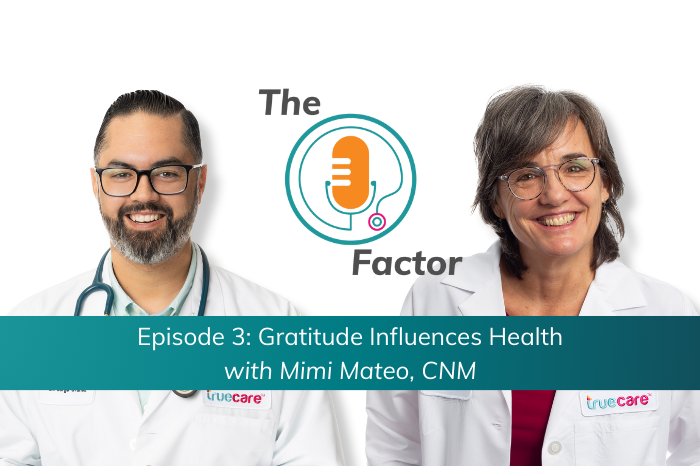
Gratitude is much more than “just think happy thoughts.” In this week’s episode, Dr. Otañez and Mimi Mateo, CNM, CDE, TrueCare’s director of wellness & belonging, explore gratitude as a practical skill that can support well-being, reduce stress and strengthen connection, especially during seasons that can feel emotionally and financially heavy.
Hear why gratitude is not denial, how small practices can help the brain shift out of constant “threat mode,” and how TrueCare supports whole-person health through care teams and resources that address real-life barriers like food insecurity, transportation and navigating coverage.
Key Takeaways
-
Gratitude isn’t toxic positivity. It works best when it starts with honesty about what’s hard, not pretending everything is fine.
-
Small routines matter. A simple daily reset like “One Good Thing” can help people notice what’s steady and supportive, even during stressful weeks.
-
Health is shaped by real life. Stress, food access, transportation and uncertainty all impact health, which is why whole-person care matters.
-
Your long-term health is a team effort. TrueCare’s approach relies on multidisciplinary teams (clinical, behavioral health, navigation, education and more) because no one person can do it alone.
What We Covered
If you’ve been feeling stretched thin lately, you’re not alone. These are a few practical takeaways from the conversation that you can try immediately.
Gratitude isn’t about being cheerful 24/7
It’s about giving your mind and body a chance to reset. Research has linked gratitude practices with improved well-being and resilience over time. Dr. O references a Harvard-published study that found higher gratitude levels were associated with a lower risk of mortality from certain causes. The bigger takeaway: Gratitude can be a supportive habit, especially when stress is high.
A simple tool you can use immediately: “One Good Thing”
Mimi shares One Good Thing, a practice introduced at TrueCare that takes about one minute:
What’s one good thing that happened in the last 24 hours?
It can be small (good coffee, a kind text, a quiet moment, a child laughing). Small is the point. Our brains naturally store negative experiences more easily (it’s protective). This practice helps intentionally balance that wiring by noticing something good and naming it.
If you want to try it, here are easy places to put it:
-
Before bed
-
At dinner
-
At the start of your workday
-
At the beginning of a meeting
Better questions create better connection
Dr. Otañez also shares reflection questions used in gratitude-focused research. You don’t need a journal or a perfect routine. You just need a moment of attention. Examples include:
-
What happened today that was good?
-
Who am I grateful for?
-
What am I looking forward to this week, month or year?
-
What is something kind someone has said or done lately?
One question that tends to hit hardest (in a good way):
“What am I taking for granted that I can be thankful for?”
When the holidays don’t feel “happy”
Dr. Otañez and Mimi acknowledge something people don’t say enough out loud: The holidays can be stressful. They can bring grief, financial pressure, family tension, loneliness, anxiety and burnout. It’s OK to name hard feelings first. Gratitude works better when it’s grounded in reality, not used as a way to silence emotions.
Whole-person care and resources at TrueCare
TrueCare works to reduce barriers that can prevent people from accessing care, including:
-
Transportation challenges
-
Not knowing what services exist or how to access them
-
Stress and uncertainty that make it harder to seek care
-
Navigating insurance, food benefits and community resources
Mimi highlights resources and teams that support whole-person wellness, including food support programs, patient navigation and resource support, and a culture that recognizes the role of kindness, connection and community engagement in overall health.
About the Guest
Mimi Mateo, CNM, CDE, is TrueCare’s director of wellness & belonging. She is a certified nurse midwife and certified diabetes educator and earned her master’s degree in midwifery from Yale University in 1989. With more than 36 years dedicated to community health centers, Mimi’s work focuses on compassionate care and supporting well-being and belonging for both patients and employees.
Educational information only; not a substitute for personal medical advice. Talk with your provider about what’s right for you and your health care needs.
Need help with insurance or food benefits? Our enrollment specialists can walk you through Medi-Cal, Covered California and CalFresh so cost isn’t a barrier to care.
Ready to prioritize your health? Get your flu shot and get care today.